ADDED 15 September 2026 · R2.1 · Research and investment hypotheses
Investment recommendation
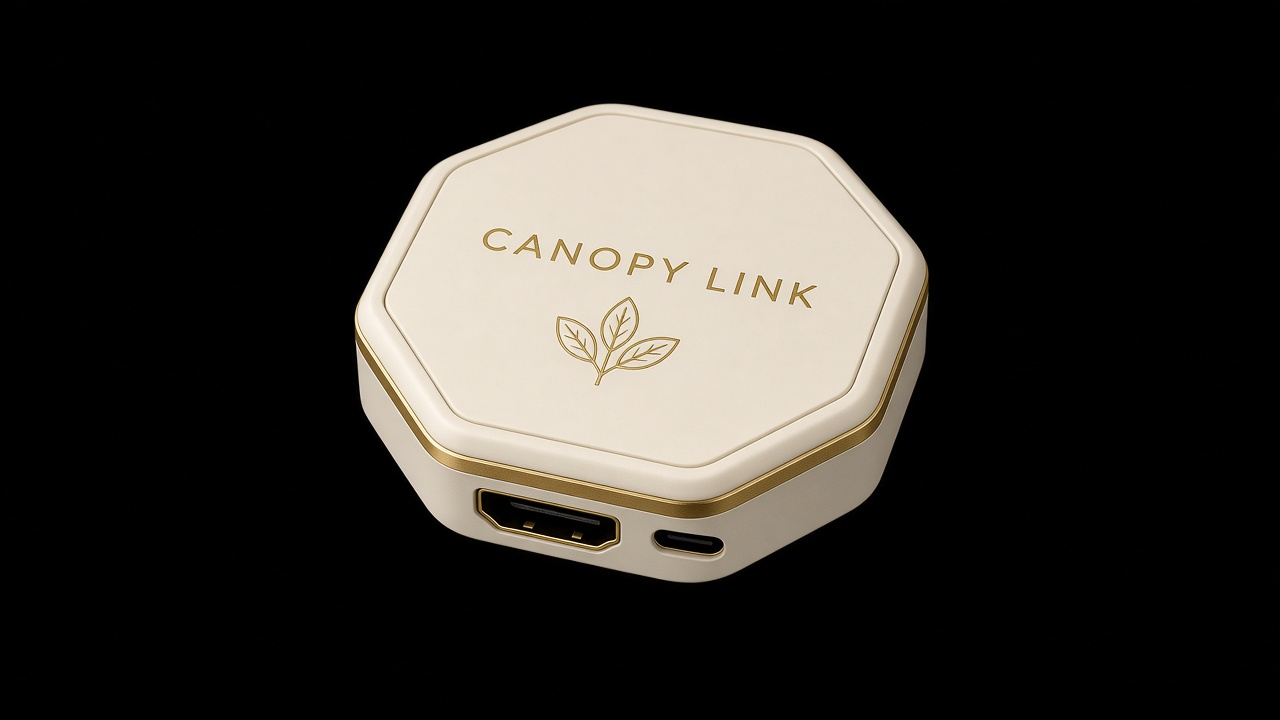
Develop Canopy Link, a working name for a mission and evidence integration product for supported mixed drone fleets. Pair it with a paid inspection service that reveals the buyer's actual integration and quality problems. Test the software and service economics separately. Keep automated operation and sensor development in a gated R&D programme until customer need, technical advantage and financing justify them.
The proposed promise is one accepted inspection result across supported aircraft, sensors and operators. Do not promise compatibility with every drone, autonomous operation everywhere, or a novel underlying communications standard. Compatibility is a tested product matrix, not a marketing adjective. The name is provisional; no trademark or patent clearance has been performed.
This direction may offer a stronger R&D case than a general booking marketplace, but research funding is conditional on a demonstrable technical uncertainty and programme eligibility. Grants do not establish demand, recurring revenue or a unicorn valuation. A $1bn outcome within twelve months remains unsupported.
The idea portfolio
These rankings are investment judgements, not measured market scores. Develop the first two together for one buyer; do not launch six businesses.
| Concept | Buyer and useful result | Proposed experiment | Decision |
|---|---|---|---|
| Link: fleet integration | Inspection operator or asset owner; consistent telemetry, capabilities and mission records across supported systems | Compare two ecosystems on the same accepted evidence specification; measure integration effort and manual reconciliation | First technical feasibility test |
| Proof: evidence quality | Portfolio owner or inspection provider; incomplete or unreliable evidence identified before delivery | Compare human review with assisted coverage/metadata/image-quality checks on permissioned records; blind review of missed defects and false alerts | Strongest initial software hypothesis |
| Portfolio: managed evidence service | Property or facilities buyer; repeat documentation with clear acceptance | Sell a bounded recurring job and measure rework, customer review time and contribution | First commercial test and learning channel |
| Sense: payload qualification | Specialist operator; an additional measurement a buyer will accept and pay for | Integrate an existing supported sensor, compare with an agreed reference method and obtain an incremental paid order | Partner before building a sensor |
| Autopilot programme: supervised site inspection | Industrial estate or other controlled site; fewer manual steps per accepted inspection | Benchmark an existing dock system, then test exception handling and evidence quality in a bounded operating environment | Sponsored R&D pilot after permissions and site access |
| Assured: civil resilience | Infrastructure authority or approved prime; controlled evidence and readiness records | Funded exercise with a named sponsor, accepted data boundary and scoped outputs | Separate programme; no speculative defence revenue |
An additional R&D idea is an inspection value planner: choose whether an existing image, ground sensor, partner flight or dock mission can answer the buyer's question at the lowest evidenced total cost. Begin with human approval and compare against simple scheduling rules. Research the decision policy only after obtaining real task histories and permission to use them. This is a hypothesis, not a claim of patentability or an existing capability.
Expansion beyond agriculture
Retain homeowner views, estate-agent media, hospitality and promotional flyovers as a scoped capture channel. Creative approval and one-off locations make them a weak first case for installing autonomous docks. Recurring commercial estates, construction progress, industrial facilities and selected environmental inspection tasks offer a better setting to measure repeated outputs. Utilities, survey-grade mapping and civil response require specialist partners and acceptance criteria. Agriculture remains a distinct monitoring/spraying vertical with its own permissions.
Use the R2 sector matrix for the full market map. The first paid buyer should have repeated assets, a known inspection budget, a current alternative and a measurable delivery problem. For the R&D pilot, prefer a consenting controlled site with stable access and a repeatable observation task. Landowner permission does not remove aviation requirements. Avoid beginning with crowds, emergency dispatch or an unrestricted public network.
Size each route from named reachable buyers × eligible assets × observed service frequency × evidenced net fee. Deduplicate accounts and do not add services GMV, software revenue and sensor sales for the same obligation. None of these inputs has yet been supplied for Canopy.
Existing products substantially overlap
| Existing alternative | Verified public offering | Consequence for Canopy |
|---|---|---|
| MAVLink and MAVSDK | Mission, command, telemetry and payload interfaces; implementations differ [S60–61] | Reuse standards. A generic protocol bridge is weak differentiation |
| Auterion / Skynode / Pixhawk Payload Bus | Vehicle and payload control, fleet tools and payload integration [S64–65] | Neither an open drone platform nor a payload bus is greenfield |
| DJI Cloud API and Payload SDK | Third-party cloud access and payload development for listed products [S62–63] | An adapter must declare supported models, firmware and functions |
| FlytBase | Drone autonomy, integrations, supported hardware and managed operations [S50] | Multi-site orchestration and vendor integration already face a direct competitor |
| DJI Dock 3 / FlightHub 2 | Automated remote missions and inspection workflows [S51] | Buy or partner for established dock capabilities; do not recreate them without a proven gap |
| Percepto | Autonomous industrial inspection and analysis [S33] | Test against a complete inspection outcome, not merely a flight demo |
| sees.ai / National Grid | UK infrastructure-inspection development described by the CAA [S66] | The UK autonomy opportunity is occupied; another operator's approvals do not transfer |
| DroneDeploy / Procore | Procore reported acquisition completion on 9 September 2026 [S46–47] | Generic construction reality capture now faces a major strategic platform; integration plans are not proof every combined feature is live |
Vendor descriptions establish advertised capabilities, not audited performance, field compatibility or Canopy partnerships. Benchmark the actual customer configuration. No exhaustive patent search, freedom-to-operate opinion or competitor product trial was completed.
What could become defensible
The research question is whether capability-aware mission translation plus consistent evidence quality can reduce human work and repeat visits across heterogeneous fleets. Standardise the meaning and provenance of data: coordinate frame, altitude reference, capture time, uncertainty, calibration, sensor identity and asset identity. A uniform JSON wrapper does not make measurements equivalent.
A potential advantage would combine tested adapters, a regression corpus of real integration failures, repeatable acceptance specifications and integrations into the buyer's maintenance or project workflow. Buyers must value these enough to pay. A connector library is otherwise exposed to OEM changes, an incumbent's feature release and bespoke integration labour.
Use a conformance programme for supported combinations, not a self-declared aviation certification. Offer original public interfaces where that aids adoption; decide ownership of test tooling, calibration methods and permissioned datasets in partner agreements. Do not assume customer imagery can be reused for model training or resale.
Sensor ideas worth testing
| Add-on | Potential accepted output | What must be established before development |
|---|---|---|
| Existing radiometric thermal payload | Qualified thermal observations paired with visible imagery | Buyer method, calibration, operating conditions and qualified interpretation; a warm pixel is not a diagnosis |
| Time/location and quality module | Sensor samples with traceable timestamps, position uncertainty and mission linkage | Existing platform cannot already supply the needed data; added accuracy changes a buying decision |
| Supported multispectral payload | Repeatable vegetation or surface measurements | A funded agronomic/environmental question, reference measurements and comparable capture conditions |
| Specialist gas/environmental sensor | Validated sample observations linked to location and conditions | Instrument partner, sampling method, ground truth and effect of installation/airflow; detection is not automatically emissions quantification |
These are proposed experiments, not new inventions. DJI already showcases gas-monitor and mapping payloads [S63]. A universal physical attachment is not feasible to claim without checking mount, mass, centre of gravity, power, electromagnetic compatibility, communications, endurance, warranty and operating approval for each configuration. Begin with supported payloads. Develop a proprietary module only if a buyer funds a documented measurement gap that existing products cannot meet.
Automation: a staged research programme
Automation of scheduling, capture, upload and review is different from unrestricted flight without human intervention. EASA distinguishes automatic and autonomous operations and excludes autonomous operation from the Open category [S52]. UK operations need the applicable CAA route [S39, S66]. The reviewed FAA material presents the broader BVLOS rule as proposed [S53]; do not base a flight plan on an anticipated permission. A dock, a network connection or ownership of land does not itself authorise BVLOS.
- Replay and simulation: normalise existing records, test quality rules and exercise failures without live command authority.
- Supervised field pilot: a qualified operator uses an established platform within its operating basis. Canopy records evidence and recommendations; the operator retains flight responsibility.
- Bounded automated workflow: schedule and request supported missions within an approved operating envelope; monitor exceptions, permission expiry, weather, link health and site access.
- Expanded remote supervision: only after the operator has the necessary permissions and workload/recovery evidence. Do not assume one person can supervise an arbitrary number of aircraft.
Loss of connectivity must leave the approved onboard system responsible for its established contingency behaviour. Canopy should not make a cloud service a dependency for flight stability. AI may recommend a mission or identify inadequate evidence; a model-generated plan must pass the same capability, authority and operating-envelope checks as any other request. Research whether the system should choose not to fly when evidence can be obtained adequately from existing records.
Funding routes: status checked 15 September 2026
| Route | Verified position | Canopy fit and action |
|---|---|---|
| EIC Accelerator [S54] | TRL 6–8 innovation grants below EUR2.5m; investment component EUR1–10m. Next listed full-proposal batch: 4 November 2026, following a successful short proposal. UK applicants are grant-only | Potential later route for demonstrated deep technology. Canopy has not evidenced that maturity or application readiness. A Bulgarian entity's eligibility requires its actual legal/SME status; do not treat a cap as an award |
| EIC Pathfinder [S55–56] | Open deadline 12 May 2026 passed. Challenges deadline 28 October 2026, with specific scientific topics | Consider only with a research team and a real scientific breakthrough. DeepRAP's cognitive-AI scope is not satisfied by labelling a drone workflow “AI”. A future open call must be separately confirmed |
| EIC Transition [S57] | Deadline 16 September 2026; eligible prior EU-funded project results are required | No such result or rights are evidenced for Canopy. Do not rush an unsupported application or present this as generic seed funding |
| Eurostars [S58] | Call 11 closed 10 September 2026. Innovative SME-led international collaboration; civil applications. Bulgarian and UK participants have additional national rules | Best programme family to investigate for a future applied integration/sensing consortium. No next deadline is asserted. Check national funds and partner eligibility before budgeting |
| Innovate UK dual-use aviation systems and autonomy [S59] | Closed 3 June 2026. Included UAS and required system-level TRL5+, a UK customer/operator and integration at system level | Relevant precedent, not an open application. Counter-UAS was excluded; UAS generally was not. Watch for a suitable successor instead of repackaging a civil marketplace as defence R&D |
The reviewed Eurostars call's UK rules include an active entity registered for at least twelve months; a newly formed UK subsidiary must not be assumed eligible. Its Bulgaria section lists a EUR200,000 project cap, subject to national evaluation; verify the applicable national instrument and budget at the next call. Civil Eurostars work must have a distinct scope from any defence programme. Programme rules can change; refresh the actual call before submission.
No grant application, award, investor commitment or confirmed consortium exists in the record. Keep speculative grant receipts out of the cash plan. Grant payments may be conditional and delayed; model matching funds, eligible costs and payment timing from the actual grant agreement. Do not count the same cost against two funding sources.
Development gates and financing logic
The following are proposed gates, not achievements or regulator acceptance criteria:
- First 30 funded days: select one buyer and observation task; obtain access to representative data and two supported ecosystems; secure OEM/API terms and supplier quotes; document the existing alternative and technical uncertainty.
- Days 31–60: demonstrate two read-only adapters and one common evidence record in replay/simulation. Publish unsupported functions. Compare quality checks with a named reviewer. Stop if existing products solve the buyer's problem economically.
- Days 61–90: complete a paid, supervised pilot; measure all setup, review and support labour and all rejected/cancelled work. Agree a buyer-valued minimum improvement before testing. Require a paid next step or a funded research partner before enlarging the team.
- Months 4–6: qualify one existing payload where needed; benchmark against a supported incumbent workflow; obtain an independently reviewable test report and a priced R&D work plan.
- Months 7–12: attempt a bounded automated site pilot only after operating permissions, technical gates, committed funds and named responsibilities are in place. Timing is conditional; approval is not promised within this period.
Measure cost per accepted inspection, intervention minutes, site visits, rework, evidence completeness, measurement error and buyer acceptance. A successful flight alone is an inadequate outcome. Small pilots cannot establish rare-event flight safety. Agree sampling and tolerances with the operator, customer and relevant technical reviewer.
Fund ordinary booking/workflow development from commercial capital. Fund genuine integration, measurement and autonomy uncertainty through an eligible R&D programme or strategic customer development agreement. Seek university capability in robotics, measurement or human factors only where it addresses a specific work package; no institution is claimed as a partner. The investment committee should authorise a costed feasibility tranche, then decide between a scalable software product, a profitable specialist service, or stopping.
Financial modelling instruction
Retain the three R2 planning models and their blank company inputs. Add a traceable R&D cost schedule before any financing decision: engineering time, supported hardware/payload quotations, integration licences, site access, connectivity, insurance, assurance, calibration, field maintenance, batteries, data processing, travel and recovery. Allocate shared staff once. Separate setup cost, recurring cost, commercial receipts, grants and equity.
Compare a managed operator, an established dock provider and the proposed Canopy extension using the same accepted output and observed demand. Include idle time and field call-outs. Break-even accepted inspections = recurring fixed cost divided by positive contribution per accepted inspection; upfront investment and working capital need a separate cash schedule. No price, saving percentage, sensor bill of materials, grant award or utilisation has been invented. The present workbooks do not yet contain a costed autonomy deployment forecast.
Primary sources are S46–S66 in sources.json, alongside the R1/R2 sources cited above. Implementation detail: integration and autonomy proposal. This is desk research and a proposed programme, not a live control system.
Capability contract (from the Link implementation)
Full staged proposal: Link implementation. Key capability split and work packages only — no invented hardware prices.
Product boundary
The customer commissions a defined observation. Canopy associates the permitted mission, sensor readings, source files, quality review and acceptance with an asset. For supported platforms, it can eventually request a bounded mission through an authorised adapter. The existing flight controller and qualified operator retain their approved responsibilities.
Separate three capabilities in the product UI and commercial contract:
| Capability | First implementation | Promise to avoid |
|---|---|---|
| Telemetry and evidence sharing | Read-only ingest, source identity, timestamps, quality and permissions | Phone location is aircraft telemetry; a missing value is zero |
| Mission coordination | Capability lookup, approved job specification, readiness and operator approval | A mission format means every aircraft can perform it |
| Flight/payload commands | Later, allowlisted functions through tested official interfaces and an explicit control owner | Generic joystick control, unrestricted cloud autonomy, universal compatibility |
MAVLink/MAVSDK, DJI APIs and Auterion/Pixhawk interfaces already cover important portions of this stack. Build on them; do not invent a new radio protocol. The novelty hypothesis concerns semantic consistency, quality assurance and reduced customer work. No patentability conclusion has been established.
R&D work packages
| Work package | Deliverable | Evidence needed to proceed |
|---|---|---|
| Buyer baseline | Accepted output, current method, cost/time and failure categories | Paid sponsor or paid pilot, data permission and named reviewer |
| Integration | Two read-only candidate adapters and capability matrix | Replay records reconcile; missing/stale/incorrectly framed data remain visible |
| Quality research | Coverage, timing and measurement-quality checks | Blind comparison with reference labels; false alarms and missed failures reported |
| Sensor qualification | One existing payload assessed across supported configurations | Reference-method results and installation/operational acceptance |
| Supervised automation | Bounded workflow in simulation, then permitted site tests | Operator approval, tested exception ownership and incumbent comparison |
| Commercialisation | Supported SKU, quote, support scope and next paid order | Contribution after support/field work; partner IP and licensing terms |
Cost every package using named people and supplier quotations. Project plan, owners and resource commitments remain to be agreed. Keep grant-funded work and commercial delivery costs traceable and prevent double funding.